
On this page
- What ends up in Fox Cities gutters?
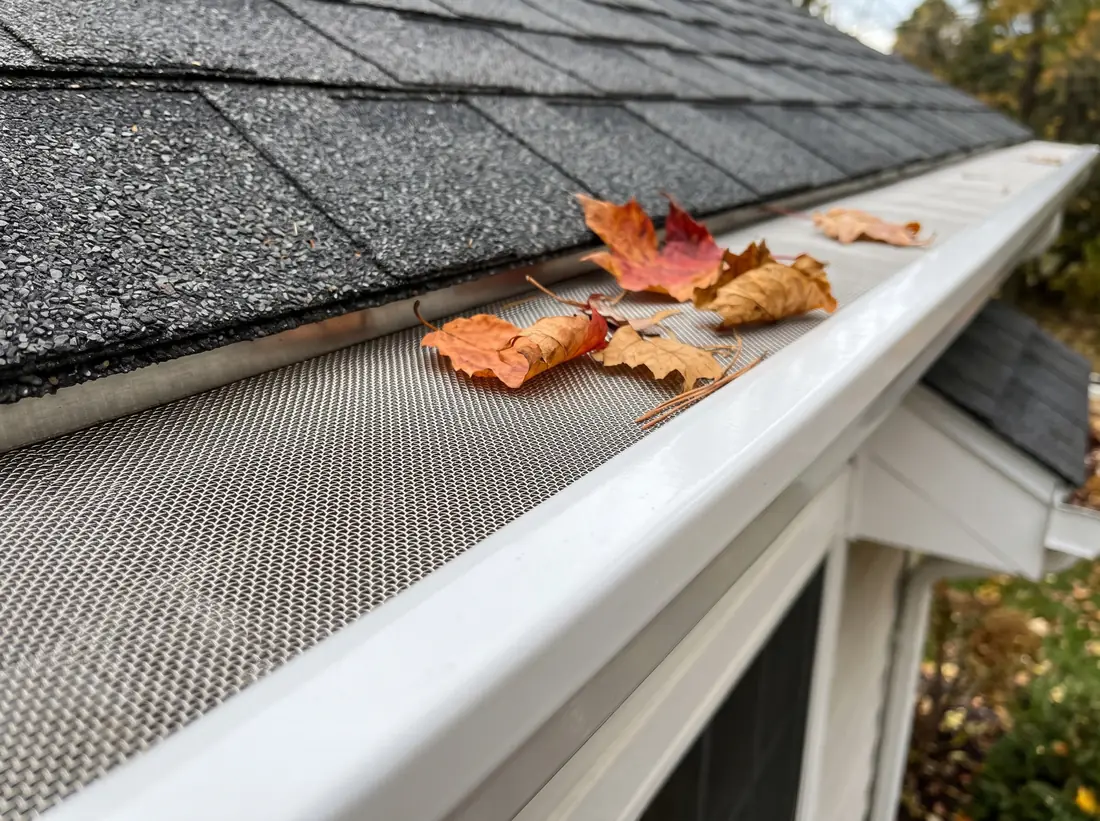
- How do the main guard types work?
- What happens to a guard in winter?
- When does a guard pay for itself?
- What needs doing before guards are fitted?
- How do guards attach?
- How should a guard quote be read?
- What maintenance is still needed?
- What can a guard not fix?
- Do guards suit every roof?
- What about half-round gutters?
- Can guards be lifted off later?
What ends up in Fox Cities gutters?
Mature maples, oaks and other yard trees shade many local streets. Wisconsin's urban forest inventory found Norway maple, boxelder and honeylocust most common among large trees in Milwaukee, and Norway maple, honeylocust and white oak in Madison. Maples drop winged seeds in late spring and leaves in autumn; oaks drop catkins, acorns and leaves that come down late; honeylocust drops tiny leaflets and long pods. Appleton has also been losing ash since emerald ash borer was confirmed there in 2015. That blend of large and very small material is what decides which guard copes.
How do the main guard types work?
| Type | How it keeps debris out | Best at | Drawbacks |
|---|---|---|---|
| Micro-mesh | Fine stainless mesh on a rigid frame | Seeds, leaf fragments, catkins | Needs an occasional brush; quality varies widely |
| Screens | Punched or expanded metal or plastic | Big leaves, on a budget | Seeds slip through; plastic cracks in cold |
| Hoods (reverse-curve) | Water follows a curved lip into a slot | Big leaves | Can overshoot in downpours; slot can ice over |
| Foam or brush inserts | Fill the trough | Short-term fixes | Hold water, which then freezes |
What happens to a guard in winter?
Snow lies on top of every type. In a thaw, meltwater goes through mesh into the gutter just as it would without one. In a deep freeze, ice can form on the mesh and in the trough, and no guard does anything about ice dams, which begin with attic heat warming the roof. The real test is how the guard is fixed: screwed to the front lip and secured at the back, so a slab of sliding snow cannot strip it off. Plastic screens and loose snap-in inserts are the usual winter casualties.
When does a guard pay for itself?
When the house is under trees that drop heavily, the gutters are high or awkward to reach, and the system underneath is sound. On a two-storey house under mature maples, saved cleaning visits can cover the cost within a few years. On a ranch with little canopy, they seldom do. Are gutter guards worth it? sets out the arithmetic.
What needs doing before guards are fitted?
A guard hides whatever is underneath, good or bad. First:
- clean every run and flush every downspout;
- reseal leaking corners and end caps;
- rehang any dipped run so water and ice cannot pool under the mesh;
- check outlets are large enough, since a 3x4-inch downspout pairs well with a guard;
- replace any soft fascia.
How do guards attach?
Most micro-mesh systems either tuck under the first row of shingles or rest on the drip edge, then screw to the front lip of the gutter. Tucking under shingles should not break their seal or affect a roof warranty, so ask how the installer handles it. Hidden hangers need to line up with the guard frame, which is one reason guards often go on with new gutters.
How should a guard quote be read?
Height and system type move the price more than the brand name. Ask for a per-foot price with cleaning and repairs shown on separate lines, so you can see what the guard itself costs.
| Item | What to look for |
|---|---|
| System | Brand or product named |
| Mesh | Stainless steel rather than aluminum or plastic |
| Frame | Rigid, screwed to the gutter lip |
| Back edge | How it fixes; whether shingles are lifted |
| Prep work | Cleaning, resealing, rehanging included or not |
| Price | Per foot and total feet |
| Cover | Manufacturer and installer terms in writing |
What maintenance is still needed?
Brush the top of micro-mesh once or twice a year, and after the spring seed drop. Look after big storms and after a heavy winter. Flush the downspouts, since guards stop large debris but not the fine grit that settles in elbows. See gutter cleaning.
What can a guard not fix?
Undersized gutters, poor fall, leaking joints, soft fascia and downspouts that empty at the foundation. Guards do not stop fine grit and do not prevent ice dams. On a sound system a guard works well; on a poor one it simply covers the faults.
Do guards suit every roof?
Most, with a few exceptions. Very low-pitch roofs let debris sit on the mesh rather than slide off, so expect more brushing. Metal roofs need a guard that fixes to the gutter and drip edge without piercing the panels. Slate and tile roofs need a system that never lifts the roofing. Flat roofs with scuppers usually do better with strainers at the outlets than with guards along the edge.
What about half-round gutters?
Fewer guards are made for half-round than for K-style, but they exist. If your house has half-round, ask for a system made for that profile and look at a sample before ordering, since a guard designed for K-style will not seat properly.
Can guards be lifted off later?
Most can. Micro-mesh panels usually unscrew from the front lip and screens lift out; hood systems vary. Ask before you buy, since gutters still need the occasional repair and full clean, and roofers will need them off when the roof is replaced.
Before you hire in Wisconsin
The state does not run a general contractor license or exam, according to Housecall Pro's state summary. The credential that matters is linked to permits: when a building permit for a one- or two-family dwelling is pulled by anyone other than the resident owner, that person needs Dwelling Contractor certification and a named Dwelling Contractor Qualifier. Plenty of gutter jobs need no permit, so find out whether yours does and who would take it out.
- Request proof of liability cover issued to the business itself, and look at the policy period.
- Have every detail on paper before work starts: profile, size and metal thickness, how the gutter is hung and how far apart the hangers sit, downspout count and size, each discharge point, and who hauls away the old system.
- Find out what the installer stands behind on labor, and what the coil maker stands behind on the metal and paint.
- Where a buried line or any digging is part of the plan, the contractor should file a Diggers Hotline request first; ask for the ticket number.
To get guards priced for your house, call (920) 280-3923.