
On this page
- What are the fascia and soffit?
- What damages them?
- How do you check them?
- How is fascia repaired?
- Wood, composite or wrap?
- Why does soffit ventilation come up?
- How is it priced?
- How do you stop it coming back?
- What about animals in the soffit?
- Does fascia need a permit?
- Can fascia be repaired in winter?
- Should fascia be done with a new roof?
What are the fascia and soffit?
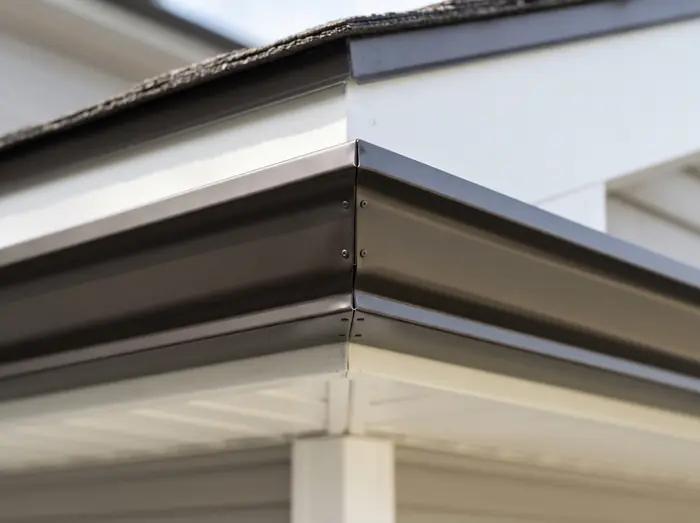
The fascia is the board along the ends of the rafters at the eave. Gutter hangers screw into it. The soffit is the panel underneath the overhang, between the fascia and the wall, often vented to let air into the attic.
What damages them?
| Cause | What happens |
|---|---|
| Water behind the gutter | No drip edge, or a gutter hung above it, lets water run down the board |
| Leaking corners | A drip at the same spot every rain softens the wood beneath |
| Overflow | Water spilling over the lip soaks the board from the front |
| Ice | A gutter full of ice loads every fixing and splits weak wood |
| Ice dams | Water backing up under shingles at the eave wets the top of the board |
| Pests | Gaps in rotten soffit let in insects, birds and squirrels |
How do you check them?
From the ground, look for peeling paint, dark streaks, gaps between gutter and board, and hangers pulled forward. From a ladder, press the wood with a screwdriver: sound wood resists, rotten wood gives. Check the soffit for sagging panels, stains and holes, especially below corners and valleys.
How is fascia repaired?
- The gutter is taken down along the damaged stretch.
- Rotten wood is cut back to sound timber.
- New board is fitted and fixed, and primed and painted if wood.
- Soft rafter tails are repaired if needed.
- A drip edge is fitted or corrected so water goes into the gutter, not behind it.
- The gutter goes back up on new hangers, with the fall reset.
Wood, composite or wrap?
| Option | Strengths | Watch for |
|---|---|---|
| Primed wood | Lowest cost, easy to work | Needs paint; rots if water returns |
| Composite or PVC | Will not rot | Costs more; needs suitable fixings and allowance for movement |
| Aluminum wrap over sound wood | No painting; sheds water | Must not hide rot; poor wrapping can trap water |
Why does soffit ventilation come up?
Vented soffits let outside air into the attic, helping keep the roof deck cold. University of Minnesota Extension notes that natural ventilation helps against ice dams, but puts air sealing and insulation first. Do not block soffit vents when repairing or insulating.
How is it priced?
Usually by the foot once the old gutter is off and the extent of rot is clear. Ask for a per-foot rate in the gutter estimate so the final bill is predictable. A few feet adds little; long stretches of rotten board can add a day to the job.
How do you stop it coming back?
Fix the cause. Make sure the drip edge laps into the gutter, reseal leaking corners, cure overflow with bigger outlets or more downspouts, and keep gutters clean before winter. If ice dams keep forming, deal with the attic.
What about animals in the soffit?
Rotten or loose soffit panels are an open door for squirrels, birds, bats and wasps. If you hear scratching above the eaves or see nesting material, deal with the animals first, using a wildlife specialist where needed, then replace the damaged panels and close every gap. Screened vents keep air moving without letting animals in.
Does fascia need a permit?
Like-for-like replacement of trim boards is usually treated as routine repair, but rules differ between Fox Cities communities. If rafter tails or structural framing need repair, ask your city, village or town whether a permit applies.
Can fascia be repaired in winter?
Small sections can, on dry days, but paint and some sealants need warmer weather. If rotten fascia is found during a winter repair, a temporary fix that keeps the gutter up is common, with the board replaced and painted in spring.
Should fascia be done with a new roof?
It is the best time. The drip edge comes off anyway, the board is exposed and the roofer and gutter crew can coordinate.
Before you hire in Wisconsin
The state does not run a general contractor license or exam, according to Housecall Pro's state summary. The credential that matters is linked to permits: when a building permit for a one- or two-family dwelling is pulled by anyone other than the resident owner, that person needs Dwelling Contractor certification and a named Dwelling Contractor Qualifier. Plenty of gutter jobs need no permit, so find out whether yours does and who would take it out.
- Request proof of liability cover issued to the business itself, and look at the policy period.
- Have every detail on paper before work starts: profile, size and metal thickness, how the gutter is hung and how far apart the hangers sit, downspout count and size, each discharge point, and who hauls away the old system.
- Find out what the installer stands behind on labor, and what the coil maker stands behind on the metal and paint.
- Where a buried line or any digging is part of the plan, the contractor should file a Diggers Hotline request first; ask for the ticket number.
To have fascia and soffit checked with your gutters, call (920) 280-3923.